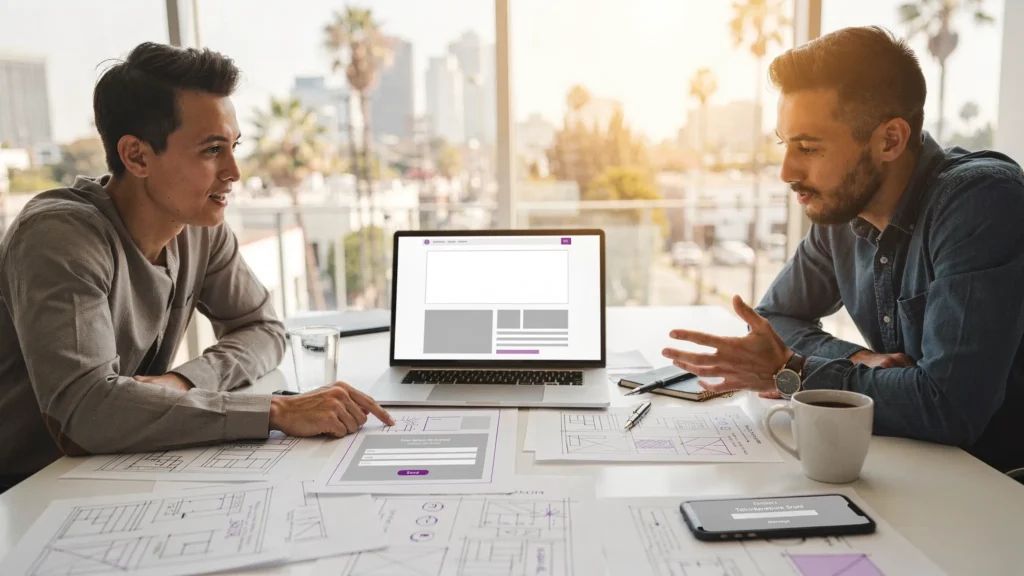
If you are shopping for web development in Los Angeles, you are probably not looking for “a website.” You are looking for an online system that drives calls, bookings, quotes, or sales in one of the most competitive markets in the U.S. That is why the best local firms behave less like page builders and more like product teams: they clarify your offer, build conversion paths, connect tools, and support the site after launch.
Below is what strong LA-area web development firms typically deliver (and what you should ask for) so you can compare vendors confidently, even if you are not technical.
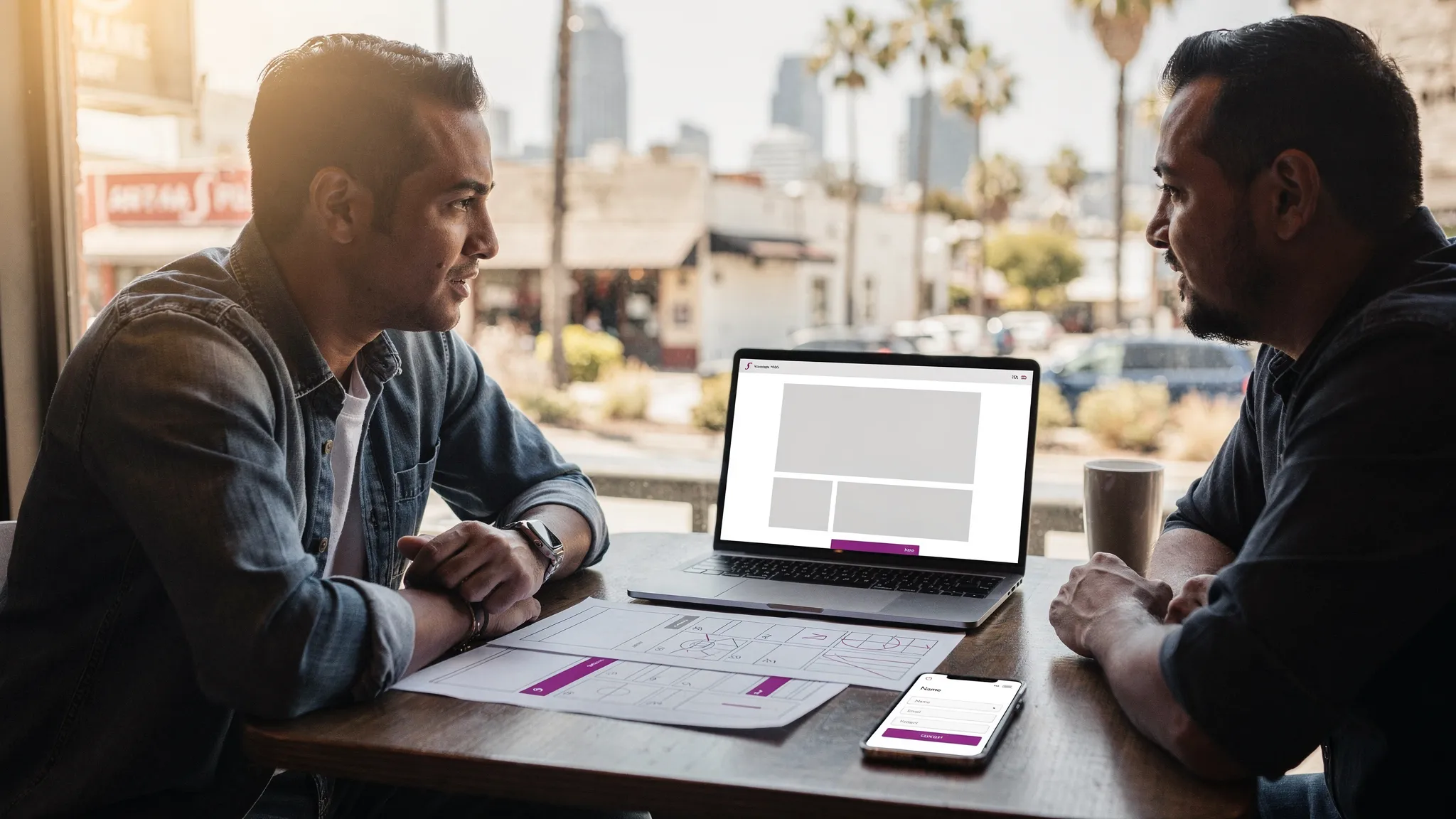
1) Strategy that matches how customers actually buy in LA
A common failure mode with “cheap build” projects is skipping strategy. In LA, where customers comparison shop fast, your site needs to answer a few questions immediately: Who is this for, what do they get, why trust you, and what happens next.
A good local dev team will usually start by defining:
- Primary goal (calls, bookings, quote requests, online orders, lead capture)
- Target service area (LA neighborhoods, surrounding cities, or the Inland Empire)
- Key differentiators (speed, warranty, specialties, languages, licensing, availability)
- Conversion path (landing page to action, plus follow-up automation)
This is also where local teams often add value you cannot get from a generic template, they understand how location pages, review proof, and “near me” intent affect conversions.
2) UX, content, and design built for conversion (not just aesthetics)
In practical terms, “design” from a real web development firm includes structure and messaging, not just colors.
Expect deliverables like:
- Page hierarchy and navigation that match user intent (services, pricing signals, FAQs, areas served)
- Copy guidance or copywriting support (especially for home page and service pages)
- Trust signals placed where people hesitate (reviews, badges, case studies, guarantees, before/after)
- Strong calls-to-action (CTA) that are easy to tap on mobile
If your customers are bilingual or your staff answers in more than one language, a local team should be able to plan bilingual UX properly (not just auto-translate), including URL structure and on-page SEO considerations.
3) Development that is maintainable (and not a black box)
“Web development” is the build quality under the design. The most valuable difference between a solid firm and a risky one is whether the website can be maintained, expanded, and secured without breaking.
Local firms often deliver:
- A content management system (CMS) you can update without calling a developer for every change
- Clean components and reusable sections (so new pages do not become a one-off mess)
- A staging workflow (changes tested before going live)
- Documentation or handoff training for your team
If you are a non-technical founder, you should also ask what happens when you need to add a location page, a new service, a new product category, or a new form workflow. A maintainable build makes those changes predictable.
4) Performance work (Core Web Vitals) that impacts rankings and leads
In 2026, speed is not a nice-to-have. It affects:
- Conversion rate (people bounce when the page feels slow)
- SEO performance (especially on mobile)
- Paid ads efficiency (landing page experience matters)
Strong web development teams will treat performance as part of the build, not a plugin added later. That usually includes image optimization, caching strategy, font handling, script restraint, and ongoing monitoring.
If you want a quick benchmark for what “performance work” typically includes, here is a high-level view:
| Area | What a good firm delivers | Why it matters |
|---|---|---|
| Front-end assets | Compressed images, limited scripts, optimized fonts | Faster first load and better UX |
| Infrastructure | Sensible caching and CDN options | Faster delivery across devices |
| Measurement | Core Web Vitals tracking and regression checks | Prevents “it got slow again” |
| Mobile | Touch-friendly layouts and lighter pages | Most local traffic is mobile |
5) Local SEO foundations (beyond “installing a plugin”)
For LA businesses, local search is often the highest ROI channel. A web development firm can support this by building the right structure from day one.
What reputable firms usually deliver:
- Clean technical SEO setup (indexing controls, sitemap, canonicalization basics)
- Local landing pages when relevant (city or neighborhood pages that are not duplicate fluff)
- Review and trust markup where appropriate
- Internal linking that supports services and locations
- Schema basics (LocalBusiness, Organization, product schema for ecommerce when applicable)
Important: local SEO is not magic text stuffed with city names. The best teams build pages that answer real questions (pricing ranges, service boundaries, turnaround times, what to expect, examples).
If you want a deeper expectation list, this guide is a useful companion: Web Design Services: What Small Businesses Should Expect.
6) Integrations with the tools you already use (or need next)
Most small businesses do not need “custom software” on day one, but they do need systems to talk to each other. A local web development firm should be able to connect your website to the rest of your operations.
Common integrations delivered for LA-area SMBs include:
- CRM connection (web-to-lead forms, pipeline stages, lead source tracking)
- Scheduling (bookings routed to the right team or location)
- Payments and quotes (Stripe, QuickBooks, invoices, deposits)
- Email and SMS follow-up (lead confirmation, reminders, review requests)
If you are evaluating CRM work specifically, this breakdown can help you avoid paying for features you will never use: CRM Software: Features Small Teams Really Need.
7) Ecommerce that fits your real-world operations
For ecommerce, “web development” is rarely just product pages. The work that matters is in the boring details:
- Product taxonomy (categories that match how shoppers search)
- Shipping and delivery rules (zones, cutoffs, local delivery logic)
- Inventory workflows (simple stock, variations, bundles)
- Abandoned cart and post-purchase flows
In local LA commerce, click-and-collect, same-day delivery rules, and seasonal spikes are common. A firm that has built for local retailers will ask about this early.
8) Hosting, security, and reliability (what you are really buying)
A website that drives leads is an asset. Assets need protection.
Quality teams typically deliver:
- SSL and security hardening basics
- Backups and restore process (not just “we have backups”)
- Uptime monitoring and error alerts
- Update management (themes, plugins, dependencies)
If your project needs more control (for example, a custom app, a high-traffic campaign, or isolated resources), some teams will recommend VPS hosting. In that case, it can be worth reviewing a provider that specializes in managed servers, for example managed VPS hosting options designed for reliability and protection.
9) Accessibility and compliance awareness (especially important in California)
Accessibility is both the right thing to do and a risk reducer. Many LA firms now build with modern accessibility expectations in mind (often aligning with WCAG standards).
What that looks like in practice:
- Keyboard navigation support
- Sufficient color contrast
- Form labels and error handling that work with assistive tech
- Sensible heading structure
Also, California privacy requirements can affect how you handle tracking and cookies. A good firm will at least flag risks and recommend appropriate next steps.
10) Ongoing support, iteration, and growth (where ROI compounds)
The best local web development relationships do not end at launch. They continue through iteration cycles driven by analytics and real customer behavior.
You should expect some version of:
- Post-launch checks (forms, tracking, indexing, performance)
- Maintenance and security updates
- Small monthly improvements (new landing pages, conversion tests, content support)
- Reporting that ties site work to outcomes (leads, bookings, revenue, not vanity metrics)
If you want an example of how a team reads data to make improvements (instead of guessing), see: How to optimize your website | 3 Easy Steps to Read the Data.
What to ask when comparing web development firms in Los Angeles
Most “bad fits” happen because expectations were never clarified. These questions surface quality fast:
| Question | A strong answer sounds like | Red flag |
|---|---|---|
| How will you measure success? | Leads, bookings, sales, and conversion paths | “More traffic” with no plan |
| Who owns the site and accounts? | You own everything (domain, hosting, analytics) | Vendor keeps ownership |
| What is included after launch? | Maintenance plan, support process, clear scope | “You are on your own” |
| How do you handle SEO? | Technical foundations plus content and structure | “We add keywords” |
| Can you integrate with my tools? | They ask what you use and propose options | They avoid the topic |
A realistic picture of timelines (so you can plan)
Timelines vary by scope, but most local business projects follow a similar rhythm:
- Discovery and planning (clarify goals, pages, integrations)
- UX and design (wireframes or layouts, then visual design)
- Development (build, content entry, integration)
- QA and launch (testing, tracking, indexing checks)
The fastest projects happen when you have your content ready (services, pricing notes, photos, FAQs, policies) and a single decision-maker who can approve quickly.
Frequently Asked Questions
What is the difference between web design and web development? Web design focuses on layout, usability, and visual communication. Web development is the implementation, the code, CMS setup, integrations, performance, and how the site functions.
Do I need a local web development firm in Los Angeles, or can I hire remote? Remote can work, but local firms can be stronger for on-site coordination, understanding LA competition, and building location-focused conversion and SEO strategies.
What should a Los Angeles web development project include at minimum? At minimum: mobile-first build, fast performance, secure hosting setup, analytics and conversion tracking, basic local SEO structure, and a plan for updates after launch.
How do I know if a firm will build a site I can maintain? Ask for a walkthrough of how you will edit pages, add sections, and publish updates. Also ask what happens when you need new features later (do they document and use reusable components?).
Can a web development firm help with leads, not just the site? Yes, many firms connect forms to a CRM, automate follow-up via email or SMS, and improve landing pages to increase conversion rates. The site becomes part of a lead system.
Build a site that acts like a sales rep (not a brochure)
Brother Web Design helps small businesses and startups in Los Angeles and the Inland Empire with custom web design, web development, ecommerce, workflow automation, SEO, and ongoing support. If you want a local team that can build the site and the system around it, explore Brother Web Design and request a quote for your project.